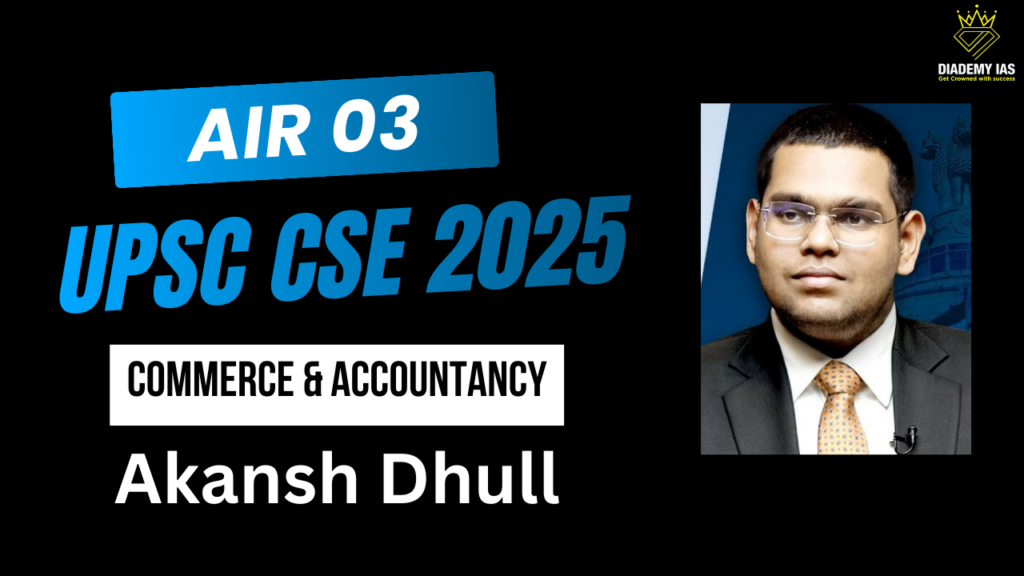
The mentorship session between UPSC topper Akansh Dhull AIR 03and Rahul Sir, Director of Diademy IAS, exposes a practical roadmap for turning optional-paper answers from generic coverage into examiner-ready, theory-driven responses. The conversation zeroes in on Organizational Behaviour techniques, answer framing, and examiner expectations, and it models how a top performer refines weak answers into high-scoring ones.
Where Most Aspirants Lose Marks
Keyword Poverty
Problem: Answers miss the precise terms examiners expect.
- Impact: Even correct ideas look unfocused and score lower.
GS-Style Content Dumping
Problem: Long lists and broad descriptions without linking to the question’s demand.
- Impact: Demonstrates breadth but not the depth or application required in optional papers.
Theory Without Context
Problem: Theories are named but not applied to the scenario.
- Impact: Examiners see rote recall rather than analytical ability.
Solution-Light Responses
Problem: Questions asking for remedies get long problem descriptions instead.
Impact: Marks lost because the “addressing” part of the question is underdeveloped.
A Practical Framework for Answer Writing
Step 1 Identify Demand
- Action: Underline command words and scope.
- Why: Forces alignment between content and marks.
Step 2 Map Theory to Demand
- Action: Pick 1–2 core theories that directly explain or solve the issue.
Why: Depth beats breadth; examiners reward precise application.
Step 3 Structure with Purpose
- Action: Use a short introduction, 3–4 body points each with theory + application + example, and a concise conclusion.
- Why: Clear structure signals clarity of thought.
Step 4 Add Value with Evaluation
- Action: Include a limitation or counterpoint and a brief way forward.
- Why: Shows critical thinking and balance.
Example Microstructure for a 10 Mark Question
- Intro: Define the issue in one line.
- Point 1: Theory name; explain; apply to question; give a short real-world or hypothetical example.
- Point 2: Repeat with second theory or managerial strategy.
- Conclusion: One-line synthesis and a practical recommendation.
Applying Theories Effectively
Maturity Theory and Managerial Grid
- How to use: Explain the theory briefly, then show how a manager would change leadership style with a concrete action such as delegation, training, or feedback loops. Add a short limitation and an alternative approach.
Workforce Diversity
- How to use: Link diversity to specific HR levers like placement, reward systems, and cross-cultural training. Provide a short example of a policy or program.
Social Media and Well-being
- How to use: Identify risks, propose policy and training interventions, and suggest measurable well-being indicators.
Strategy, Sources, and Study Routine
Prioritization
- Rule: Focus on high-scoring, concept-heavy areas of your optional first.
Core Texts
- Recommendation: Use standard textbooks for conceptual clarity and supplement with curated notes for application.
- Practice Cycle
- Write one timed answer daily.
- Review with the framework above.
- Refine by cutting fluff and adding precise keywords.
- Repeat with peer or mentor feedback.
Actionable Checklist for the Next 30 Days
- Daily: One timed answer using the 4-step framework.
- Weekly: Two answers reviewed by a mentor or peer; incorporate feedback.
- Every 10 Days: Revise one core theory and write three applications for different question types.
- Before Mock Tests: Create a one-page “theory-to-application” sheet for quick revision.
- Always: Replace at least one vague sentence per answer with a keyword-rich, examiner-friendly phrase.
Closing Note
The mentorship session demonstrates that small, disciplined shifts—choosing the right keywords, applying theories with crisp examples, and prioritizing solutions—produce outsized gains. The path from average to outstanding is not more content but smarter content: fewer, better-explained points that answer the question the examiner actually asked.