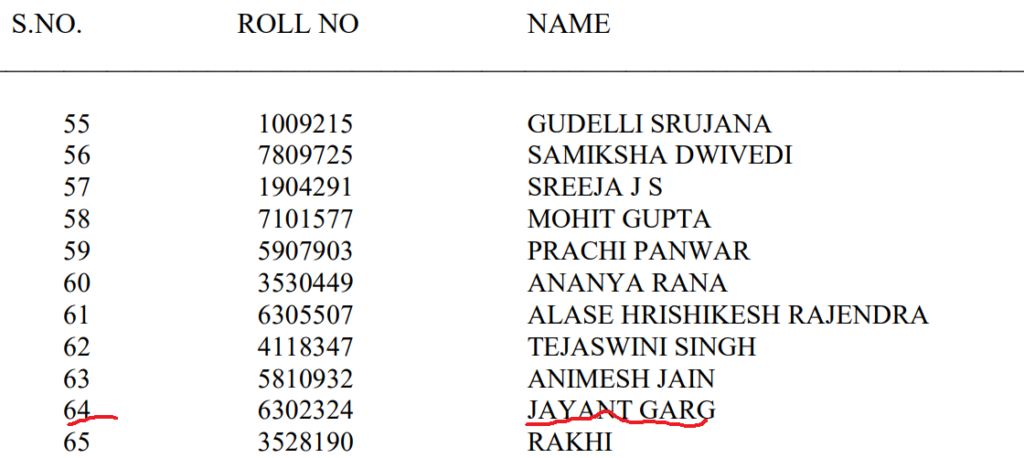
Preparing for the UPSC Civil Services Examination requires not just academic rigor but also a deep understanding of governance, economics, and public administration. In a recent interview, Jayant Garg (AIR 64, UPSC CSE 2025) shared valuable perspectives on India’s infrastructure, labor reforms, telecom disputes, and the vocation of civil services. His journey and insights serve as a guiding light for aspirants.
Financial Health of Indian Railways
- Indian Railways generates revenue of over ₹3 lakh crore annually, yet its operating ratio stands at 98.6%, leaving minimal surplus.
- Capital expenditure is heavily dependent on government support.
- Committees like the Vivek Debroy Committee have recommended private participation and divesting non-core activities.
- Developed nations earn 40–50% of railway revenue from non-core sources, while India lags at just 4%.
Bullet Train Project Challenges
- The Mumbai–Ahmedabad bullet train project has seen costs double due to land acquisition delays and tunnel construction.
- While Japanese funding covers part of the project, the Indian government bears significant financial responsibility.
- This highlights the importance of efficient project management and realistic cost assessments.
Gig Economy & Labor Reforms
- Gig workers face challenges like wage transparency, safety concerns (e.g., 10-minute delivery risks), and lack of social security.
- New labor codes define gig workers and mandate contributions from aggregator companies.
- This is a crucial step toward ensuring fair labor practices in India’s growing gig economy.
Telecom Sector & AGR Dispute
- The Supreme Court ruled that Adjusted Gross Revenue (AGR) includes both core and non-core revenue.
- This led to massive liabilities for telecom companies, threatening financial viability.
- The government deferred payments to provide relief, balancing legal accountability with economic stability.
Administrative Accountability: Indore Water Case
- A tragic incident of water contamination in Indore led to deaths and hospitalizations.
- Jayant emphasized the need for grievance redressal mechanisms and accountability at lower administrative levels.
- Such cases underline the importance of responsive governance.

Freight Transport & National Rail Plan
- Railways’ freight share has dropped from 60% to 27% due to poor last-mile connectivity and slow speeds.
- The National Rail Plan 2030 aims to raise freight share to 45% through dedicated freight corridors and digitalization.
- This reflects India’s push toward sustainable logistics and infrastructure modernization.
Civil Services as a Vocation
- Jayant highlighted that despite lower salaries compared to the private sector, civil services offer job satisfaction, responsibility, and purpose.
- He views civil services as a vocation requiring top talent and dedication, not just a career choice.
- His journey from private to public sector reflects the transformative power of service-oriented leadership.
Key Takeaways for UPSC Aspirants
- Holistic Preparation: Beyond books, aspirants must understand governance challenges and economic realities.
- Analytical Thinking: Linking current affairs with administrative reforms strengthens exam answers.
- Motivation & Purpose: Civil services demand commitment to public welfare, not just personal success.